
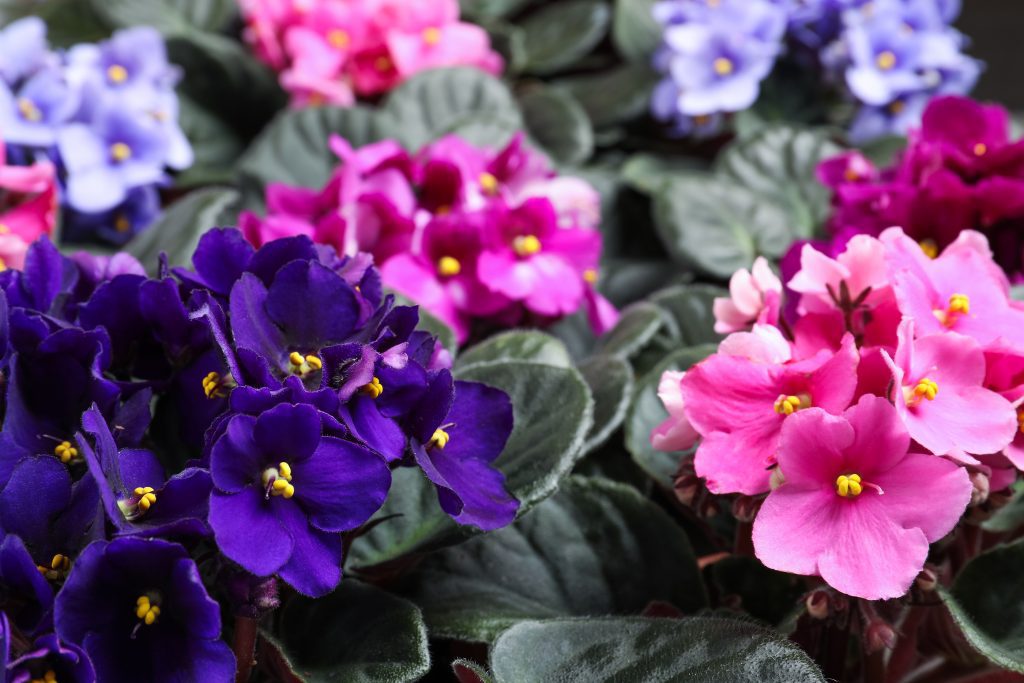
Saintpaulia ionantha are one of the most popular houseplants, and it’s no wonder why. They’re relatively easy to care for, and they come in a wide range of colors and sizes. Saintpaulia ionantha also have the ability to bloom year-round. The flowers come in an assortment of colors and some varieties produce fragrant flowers. Their compact size makes them perfect for small spaces and they’re sure to brighten up any room.
With the proper care, these wonderful flowering plants can make beautiful and long-lasting additions to your home.
Common name: African Violets
Scientific Name: Saintpaulia Ionantha
Description
Saintpaulia ionantha are short, compact plants that are right at home on a windowsill. They can be as small as micro violets, which are less than 3 inches in diameter, or as large as giant violets, which are 12-16 inches in diameter. They typically grow to a height of 2-11 inches.
The leaves are soft, fuzzy and rich dark green in color. The leaves have a leathery feel and are slightly toothed along the margins. The flowers are usually a deep purple color, although they can also be white, pink, lavender or blue. They can be ruffled or plain. Some even have a lovely fragrance.
Best Growing Environment
Saintpaulia ionantha have an undeserved reputation for being difficult to keep. Fortunately, that’s not true. There are a couple of simple things that you need to do to keep them happy. The good news is, once you meet their modest needs, you’ll be rewarded with hardy, long lasting beautiful flowering plants.
Light Requirements
Saintpaulia ionantha prefers bright, indirect light as opposed to direct sunlight. This is because they are native to forest floors in Africa where they would receive filtered sunlight. Avoid direct sun, as it can burn their leaves. Eastern or western exposures are ideal. Be sure to rotate your plants weekly so that all sides of the plant get equal light exposure.
If you cannot provide your plants with bright, indirect light, you can supplement lighting using fluorescent bulbs placed 6-10 inches above the plants. You’ll need to run your lights for 12-16 hours per day in order to give them sufficient light.
Best Temperature for Saintpauli Ionantha
Saintpaulia ionantha thrive at the same temperature range that is comfortable for humans. In general, they do best when temperatures are between 65 and 80 degrees Fahrenheit.
What Type of Soil Does Saintpauli Ionantha Need?
The best soil for them is light, airy and well-draining. These plants are susceptible to root rot, which can occur if the roots are allowed to sit in water for too long. A slightly acidic soil works best. A good way to provide this is to add peat moss to your potting mix.
You can buy African violet potting mix at your local nursery or garden center, or you can make your own mix by combining equal parts potting soil, peat moss and perlite or vermiculite. Either way, be sure the containers in which your plants live have excellent drainage.
Potting Tips
When it comes to potting saintpaulia ionantha, there are a few things you need to keep in mind.
First, choose a pot that is the right size for your plant. Saintpaulia ionantha do best in small pots—no more than six inches in diameter.
Second, make sure the pot has drainage holes. They need well-drained soil, so drainage holes are essential.
Third, refresh and change the soil every year. Nutrient-rich soil is needed for best results,so be sure to use a high-quality potting mix.
Finally, repot your plants every two to three years. This will help them stay healthy and continue to bloom.
Fertilizing
The best type of fertilizer is a water-soluble fertilizer that is high in phosphorus. This will help encourage blooming. You should fertilize every two weeks using about one-quarter teaspoon per gallon of potting mix. Water your plants thoroughly after applying the fertilizer.
Avoid fertilizers that are high in nitrogen, as this can cause leaf problems. Also, don’t over-fertilize, as this can damage your plants. And remember fertilizer on the leaves can burn your plant, so be careful when feeding your plants.
Saintpaulia ionantha likes moist soil, but too much water can cause the roots to rot. You also need to take care to avoid getting water on the leaves as this can damage them.
Instead of watering from above, water them from below by placing the plant, pot and all in a bowl of water that is an inch or two deep and let it sit for about 20 minutes or so. DO NOT WET THE LEAVES.
And don’t use cold water on them as this can shock the plant. Use water that is room temperature instead.
Propagation
Propagation is typically done by division or by leaf-cutting.
To propagate by division, simply remove a portion of the plant with roots intact and plant it in its own pot. When propagating by division, the plant can be divided into two or three sections. Each section should have its own roots and leaves. To divide the plant, carefully remove it from its pot and gently pull the sections apart. Be sure to use a clean, sharp knife. Water well and keep the soil moist until new growth appears.
To propagate by leaf-cutting, cut a leaf from the main plant with a sharp knife. Cut just below the leaf petiole (the stalk that attaches the leaf to the main stem). Remove the bottom row of leaves from the cutting, and dip the cut end in rooting hormone. Place the cutting in a pot filled with moist potting mix. Water well and keep the soil moist until new growth appears.
While saintpaulia ionantha can be propagated by seed, it is a more difficult method. Seeds can be purchased from a nursery or online retailer. Sow the seeds in a sterile seed-starting mix and keep them moist until they germinate. Once the seedlings have sprouted, transplant them into individual pots filled with potting mix. Water well and keep the soil moist until new growth appears.


